November 2026 Highlights and Hot Topics
In the November issue of Highlights & Hot Topics, learn about an NCCDD-funded project promoting safety in emergencies, celebrate this year’s advocacy award winners, welcome new NCCDD Council members, and catch up on the latest in public policy changes. The newsletter is also available in Spanish and accessible audio.
- Message from the Executive Director
- Training in Alamance Promotes Safety for People with Autism and I/DD
- NCCDD Honors Six Leaders in Disability Advocacy
- Governor Appoints New Council Members
- Public Policy Update as of 11/23/26
- Boletín en español
- Newsletter in Accessible Audio
Message from the Executive Director
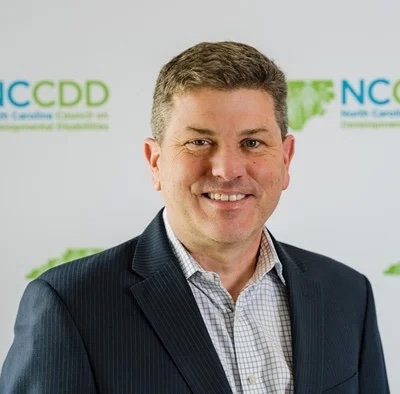 This is the time for giving thanks! I am grateful for you and each person who is part of our intellectual and other developmental (I/DD) community in North Carolina.
What a year! It has been a stressful time for all of us for lots of reasons, particularly because we faced unprecedented threats to state and federal Medicaid funding. In the face of these threats, our community showed up in record numbers and repeatedly to raise awareness with our state and federal leaders of the importance of Medicaid to the I/DD community.
We had an extraordinary group of I/DD leaders, family members, and self-advocates nominated for our North Carolina Council on Developmental Disabilities annual awards. We chose six fantastic awardees. Please take time to read about our 2026 Advocacy & Leadership Awards recipients, watch the videos, and share their stories with others.
NCCDD has also released its Annual Impact Report for fiscal year 2025-2026. I am excited for you to read about all that we were involved in this last year.
We also released our new Five-Year State Plan after holding listening sessions with hundreds of people across the state. We are excited to see what we create together from now through 2031!
Thank you for all you do! We are grateful for you!
Talley Wells
NCCDD Executive Director
Training in Alamance Promotes Safety for People with Autism and I/DD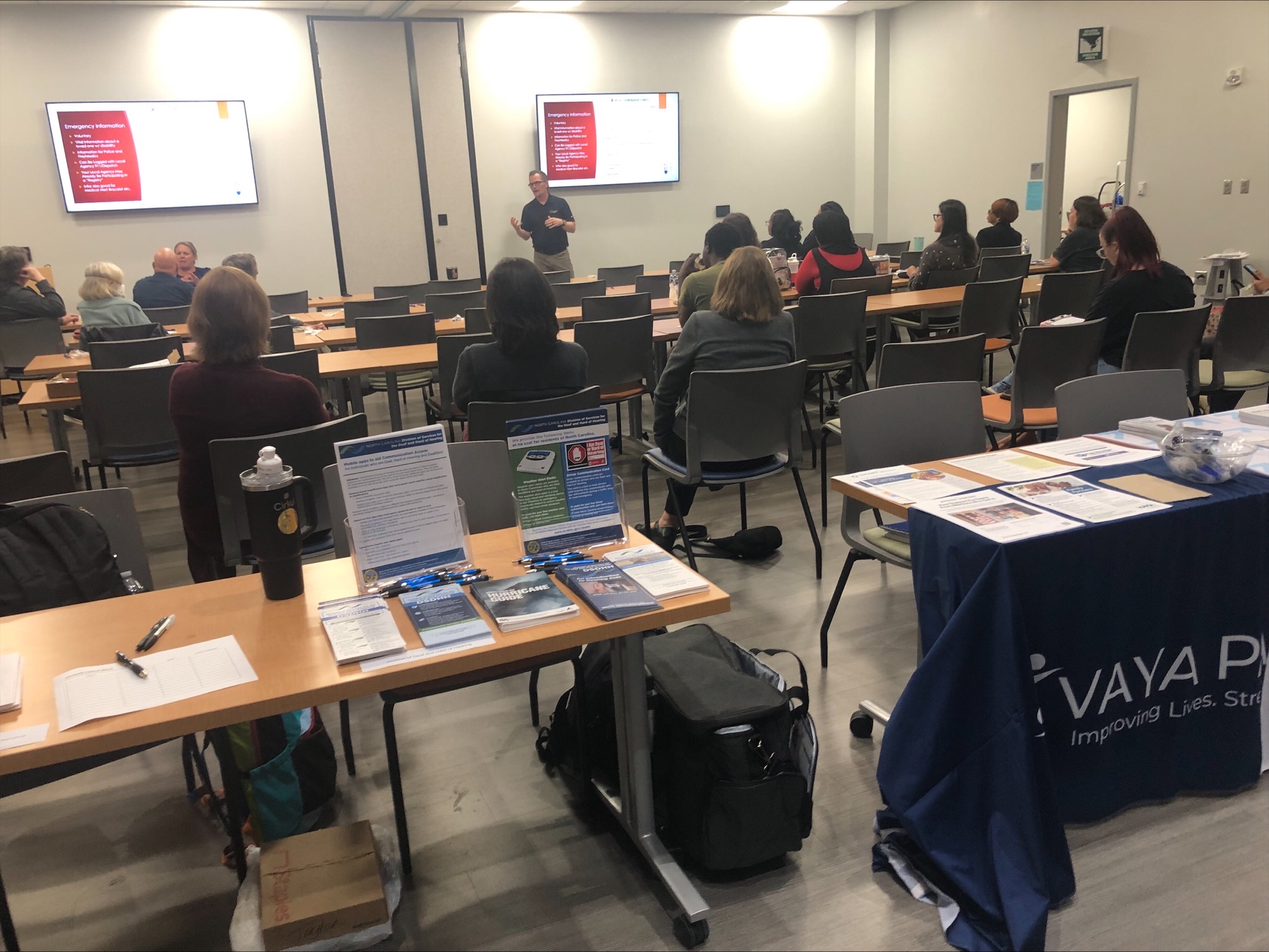
On October 29, 2026, Vaya Health, the Interaction Advisory Group, and the Alamance County Mayors Committee for Persons with Disabilities hosted a safety training focused on responding to emergencies involving people with autism or intellectual or developmental disabilities. Training sessions were held at Alamance Community College for first responders, self-advocates, families, and caregivers.
Led by Dustin Chandler, the morning and afternoon sessions focused on communication, behavior evaluation, de-escalation, sensory management, and search-and-rescue protocols for first responders. The evening session was tailored for self-advocates, families, and caregivers, covering emergency preparedness, wandering prevention, online safety, and safe interactions with law enforcement.
The event was supported by NCCDD's Autism and I/DD Safety Training for First Responders initiative.
Learn more about the initiative: Autism and I/DD Safety Training for First Responders
NCCDD Honors Six Leaders in Disability Advocacy
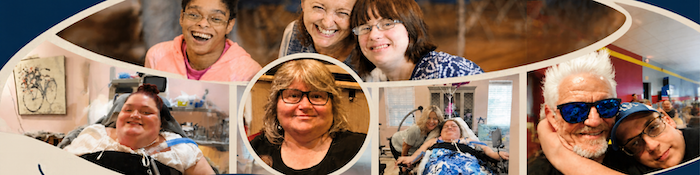
Six North Carolina leaders were honored at the 2026 Advocacy and Leadership Awards during the November meeting of the North Carolina Council on Developmental Disabilities (NCCDD) in Raleigh. The awards recognize individuals advancing inclusion, access and opportunities for people with intellectual and other developmental disabilities (I/DD).
The Kerri Eaker Mountain Mover Award recognizes advocates driving systems change. This year’s recipients were self-advocate Alexis Ratcliff, Kirby Morrow of Disability Rights North Carolina and Steve Strom, director of North Carolina’s Money Follows the Person program. Together, they helped Ratcliff move from a hospital, where she lived for six years, into her own accessible home with needed supports. Their work has also helped others with I/DD live in their communities.
Pamela McAfee of Lexington received the North Carolina Leadership Achievement Award for her work promoting civic participation and disability inclusion. Her advocacy has helped advance accessible voting, transportation equity and opportunities for people with disabilities to have a voice in local and state decisions.
Sugey Ramírez Moreno received the Jack B. Hefner Memorial Award for supporting families of children with I/DD. In 2022, she co-founded Manitas Felices INC, which provides families in the Asheboro area with resources and tools to support their children’s development and well-being.
Susan McSwain, executive director of Reality Ministries, received the Holly Riddle Distinguished Service Award. She has built an inclusive community where more than 250 adults with I/DD and 200 volunteers share meaningful relationships and experiences.
These six leaders demonstrate the power of advocacy, leadership and community partnerships in building a more inclusive North Carolina.
Learn more and watch videos about the award recipients
Governor Appoints New Council Members
The North Carolina Council on Developmental Disabilities (NCCDD) welcomes several new council members. Appointed by Governor Josh Stein, Council members are responsible for carrying out the provisions of the Developmental Disabilities Assistance and Bill of Rights Act (DD Act) by ensuring the Council is a member-driven, effective, efficient, and accountable organization. Council members approve NCCDD’s Five-Year State Plan and guide all initiatives and contracts of that plan.
Welcome to:
- Scott Badesch (at-large) from Chapel Hill in Orange County
- Zachariah Commander (parent/guardian of a person with I/DD) from Elizabeth City in Pasquotank County
- Chelsea Gray (parent/guardian of a person with I/DD) from Rutherfordton in Rutherford County
- Diane Coffey (parent/guardian of a person with I/DD) from Winston-Salem in Forsyth County
We will share more information about each new member in future issues of Highlights & Hot Topics.
Public Policy Update as of 11/23/26
FEDERAL
Mid-Term Elections
There were 35 of the 100 Senate seats on the ballot in the mid-term elections. Before the election, 22 of these 35 were held by Republicans, and 13 were held by Democrats. As a result of the election, 9 seats were flipped from Republican to Democrat, so the numbers reversed to 22 Democratic seats and 13 Republican seats. When the Senate convenes in January, the Democrats will have a majority of 54 seats to the Republicans' 44 seats. In the House, control also shifted to the Democrats. With only a very few outstanding races left to call, the projection is for the Democrats to have a 259-to-176 majority when they convene in January.
Budget
A Continuing Resolution (CR) is currently in effect and extends the previous fiscal year funding levels through December 11, 2026. Before the elections, budgets had come out of the House committees, and the House had passed some of the bills. The Senate came back after elections and released all its spending bills. The bills were written and released without compromising with committee Democrats who had been pushing for higher levels of spending for non-defense programs.
Congress adjourned for Thanksgiving break and expects to return on November 30, which gives them only 2 weeks before the CR expires on December 11. With limited time, very little bipartisan support for proposed budget bills, and a new Congress coming in January, it is highly unlikely that they will reach an agreement on a budget. They will have to agree on another CR to extend funding to federal programs and avoid a government shutdown.
SNAP
We continue to follow the changes to SNAP. Since H.R. 1 was enacted in July 2025, approximately 5.5 million people have lost SNAP (109,384 in NC). HR 1 includes a cost shift to states that is scheduled for October 2027 and will further impact recipients of food assistance. It will also put additional financial burden on the state as they struggle with other cuts to Medicaid. The partisan Farm Bill recently advanced out of the Senate Agriculture Committee only delays the Supplemental Nutrition Assistance Program (SNAP) benefit cost shift to states by one year while also including a harmful, permanent increase in future payments for some states from the current 15 percent to 20 percent. Democrats on the Committee continue to demand at least a two-year no-cost delay. Advocates are pushing to stop the SNAP cost shift – or at minimum, secure a 2-year no-cost delay. This is an area of opportunity with the new Congress.
STATE
Elections
In North Carolina, the Democrats flipped the NC House of Representatives and will hold 71 seats; Republicans will hold 48 seats and one seat will be held by an independent.
Rep. Robert Reives (Chatham County) is set to become the second Black House speaker in state history. Reives is expected to finalize and announce the remaining committee rosters around the time he is formally elected Speaker on January 13, 2027. Reives has identified health care as a top priority, specifically pointing to rising medical costs, rural provider access, and protecting Medicaid coverage amid federal changes. The Republicans will hold on to the Senate leadership with a slim 26-24 majority. Because neither chamber now holds a veto-proof majority, Governor Stein's vetoes can no longer be routinely overridden along party lines as they were in previous legislative sessions.
Legislature
The legislature came back for a short session in early November and is expected to return for another short session early December. During the November session, North Carolina Senate Bill 177 ("Continuing Budget Adjustments") was passed. It is a 62-page omnibus budget adjustment and policy bill that is awaiting action by Gov. Josh Stein. It redirects or appropriates over $100 million (up to $186 million from special reserve funds and other accounts) and changes dozens of state laws. When the new legislature convenes in January, the budget will be on top of their agenda. The House will begin the budget process, with the Senate following. There is a great opportunity to educate new legislators on the issues that are important to people with IDD.
NC Medicaid Assessment
The North Carolina Department of Health and Human Services (NCDHHS) conducted an assessment of its Medicaid program to identify data-informed program strengths and opportunities to enhance the outcomes, value, efficiency, and long-term sustainability of Medicaid. Input was gathered from a broad group of stakeholders, including people enrolled in Medicaid, health plans, providers, and other organizations involved in supporting North Carolinians' health. The report was released on November 20th. The report is open for public feedback and comment. The document is posted on the official NC Medicaid Assessment Page.
Boletín en español
Lea el boletín aquí: Aspectos destacados y temas de actualidad de noviembre de 2026
Newsletter in Accessible Audio