2025-2026 Impact Report

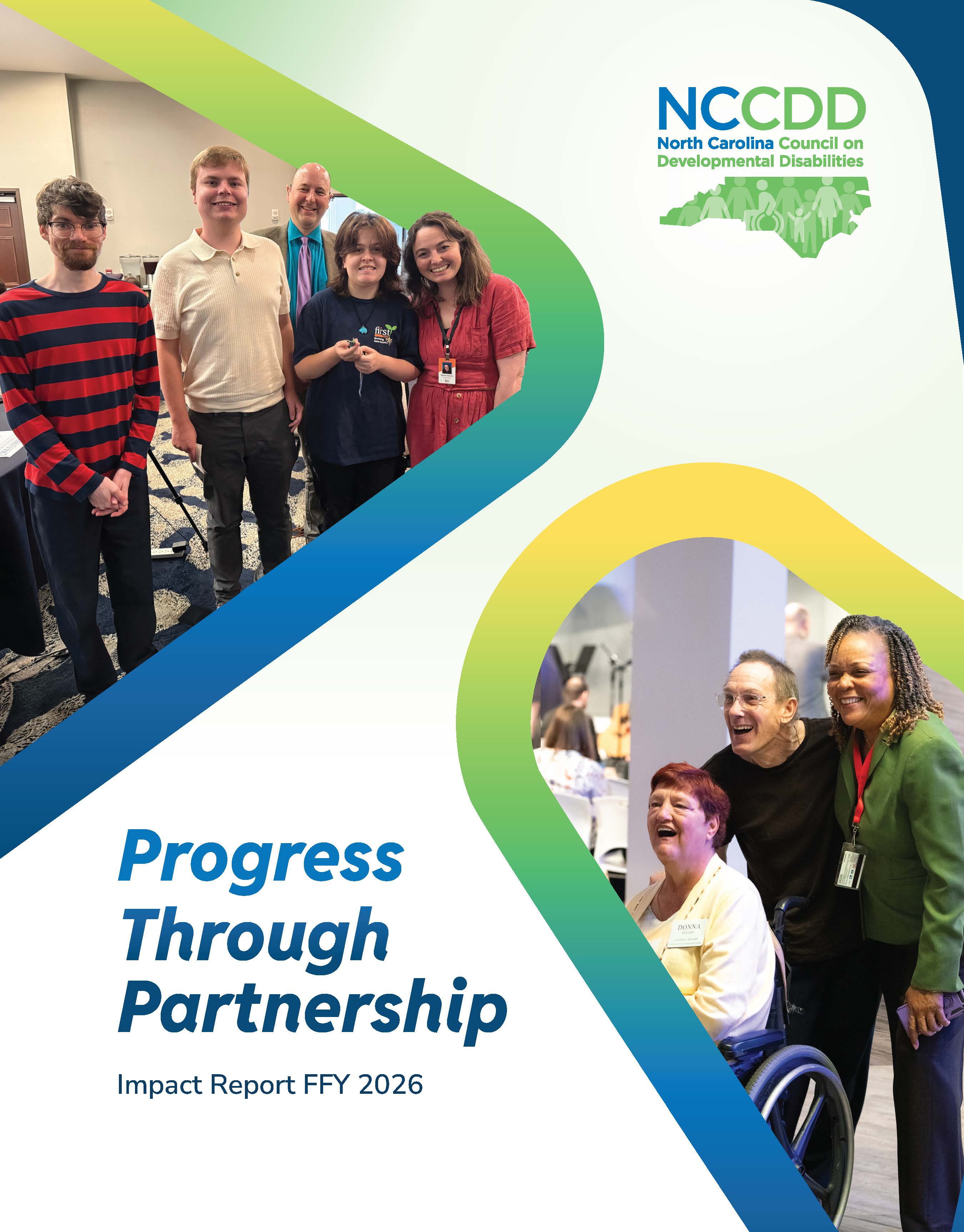
The North Carolina Council on Developmental Disabilities (NCCDD) presents its annual Impact Report, a summary of the Council's activities during the 2025-2026 federal fiscal year. Read the report for highlights of NCCDD-funded initiatives and other activities accomplished by NCCDD and its governor-appointed Council, in partnership with North Carolinians with intellectual and developmental disabilities and the community.
Message from the Council
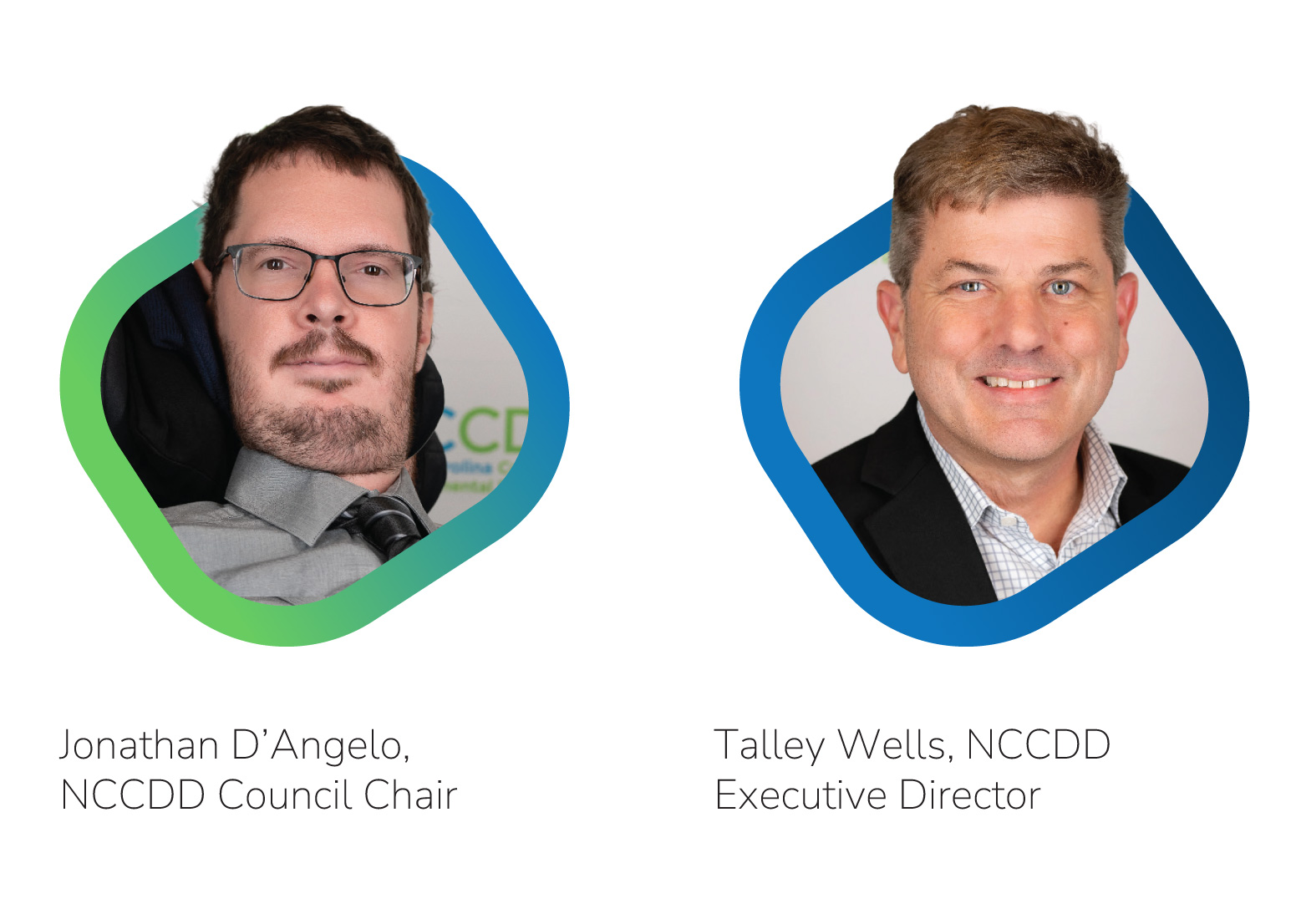
Our FY 2026 was another year of challenges, opportunities, and advocacy for North Carolina’s intellectual and other developmental disabilities (I/DD) community.
NCCDD successfully developed its next Five-Year State Plan, guided by input from individuals with I/DD, family members, and stakeholders across the state.
The year brought concerns about proposed state Medicaid cuts. Although those cuts were reversed, Medicaid funding remains at risk at both the federal and state levels.
A major success came at year’s end when the legislature and Governor increased funding for Direct Support Professionals (DSPs) and other caregivers serving people through the Innovations Waiver, CAP-DA, CAP-C, and Personal Care Services. However, a similar increase has not yet been made for 1915(i) services.
We are especially grateful to everyone who participated in the I/DD Legislative Day on April 29, 2026. We believe the community’s advocacy, alongside the leadership of the Legislative I/DD Caucus, helped make these workforce funding increases possible.
Throughout the year, NCCDD advanced its work in advocacy and leadership, community and belonging, financial security and independence, communications, and policy education.
Despite the challenges, we achieved meaningful progress thanks to the dedication of our extraordinary Council, staff, and most importantly, the I/DD community.
Jonathan D'Angelo, NCCDD Council Chair
Talley Wells, NCCDD Executive Director
About the Council
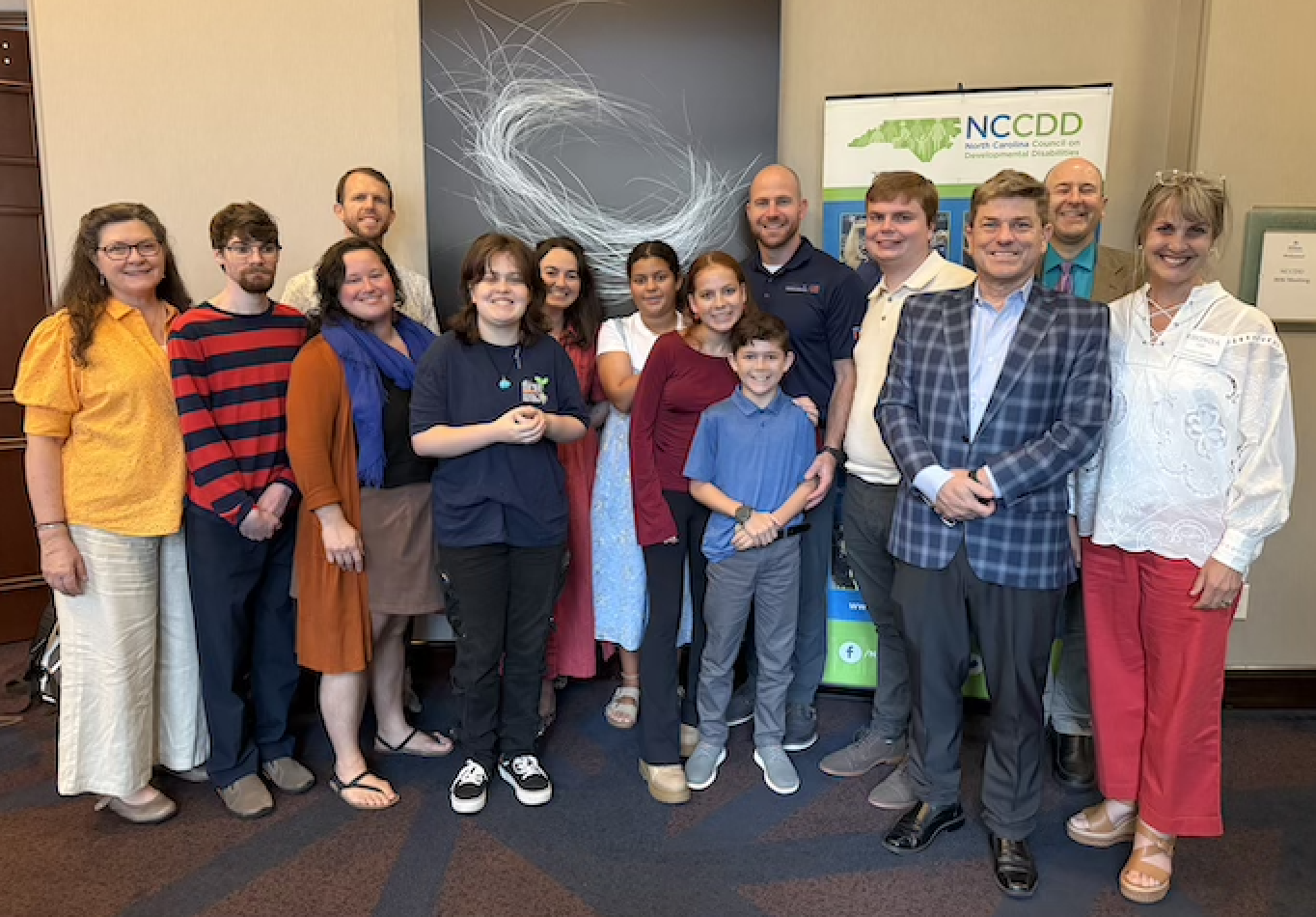
The North Carolina Council on Developmental Disabilities (NCCDD), a 40-member body appointed by the Governor, is made up of:
- People with intellectual and/or other developmental disabilities (I/DD)
- Parent/Family member/Guardian
- Representatives of State agencies
- State legislators
- Representatives from Disability Rights NC and the Carolina Institute for Developmental Disabilities
- Provider and Local Management Entities/Managed Care Organization representatives (LME/MCO)
The Council represents people across North Carolina and is responsible for carrying out the provisions of the Developmental Disabilities Assistance and Bill of Rights Act (DD Act). Staff make sure the Council is a member-driven, effective, efficient, and accountable organization. Sixty percent of the Council’s members are people with intellectual or developmental disabilities (I/DD) or their family members. The rest are representatives from state agencies, nonprofits, and professional organizations. The Council directs all initiatives and contracts.
Learn more about the Council:
Policy Education to Inform Advocates
NCCDD supports policies that promote community inclusion for people with intellectual and developmental disabilities (I/DD) and strengthen connections with their support networks. NCCDD also shares information to help people with I/DD, their families, and community leaders understand important issues, policy changes and legislative updates that affect their lives.
Click on the + symbol to the right of the section heading to view the section’s content.
NCCDD’s policy education efforts are guided by its public policy priorities. For 2026, the Council identified these focus areas:
- Protect Medicaid and I/DD services during ongoing federal and state budget challenges
- End the waiting list by developing and funding a plan to serve the more than 20,000 individuals currently waiting for services
- Increase direct support professional (DSP) wages to strengthen the workforce
Additional priorities included:
- Expanding housing and transportation options
- Increasing Competitive Integrated Employment (CIE)
- Ensuring the success and effectiveness of I/DD services
NCCDD’s monthly Capital & Community Policy Education Meeting provides an opportunity for people with I/DD, family members, and leaders to engage in discussions on key policy issues impacting North Carolina’s I/DD community. A monthly Public Policy Update featuring state and federal updates is also posted on NCCDD’s Public Policy Blog.
Data:
Policy Education Meetings Attendance for the Fiscal Year:

In October 2025, NCCDD surveyed North Carolina’s I/DD community to understand the impact of drastic Medicaid cuts announced in September. The survey received 345 responses from people with disabilities, family caregivers, Direct Support Professionals (DSPs), and service providers.
Responses showed a system under strain, with families concerned about losing essential services, DSPs facing wage reductions, and providers struggling to maintain operations. The overwhelming majority expressed anxiety, frustration, and a sense of abandonment.
NCCDD compiled these first-hand accounts into a report documenting the impact of the cuts. The report was shared with the I/DD community and policymakers to bring awareness of the impact these cuts would have. Read the report: Impact of Cuts to Medicaid in North Carolina: A Summary of Community Voices
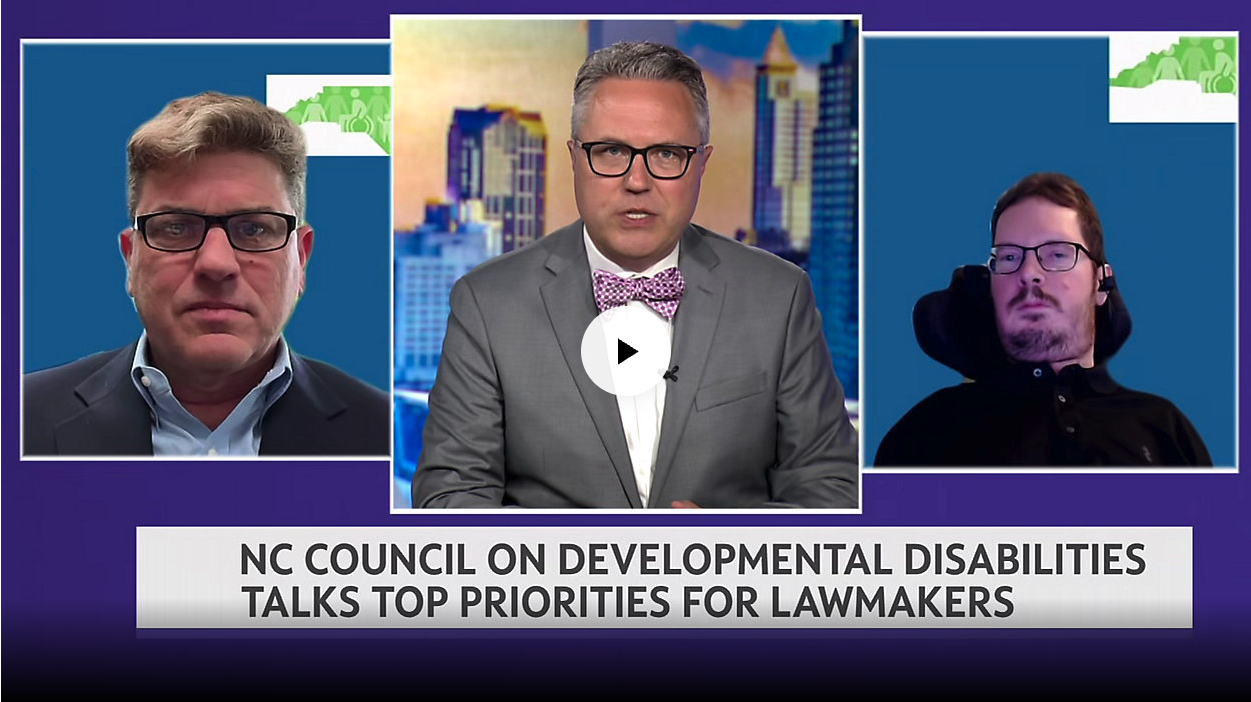
Interview with Spectrum News on April 30, 2026. The interview begins at the 14:23 time mark.
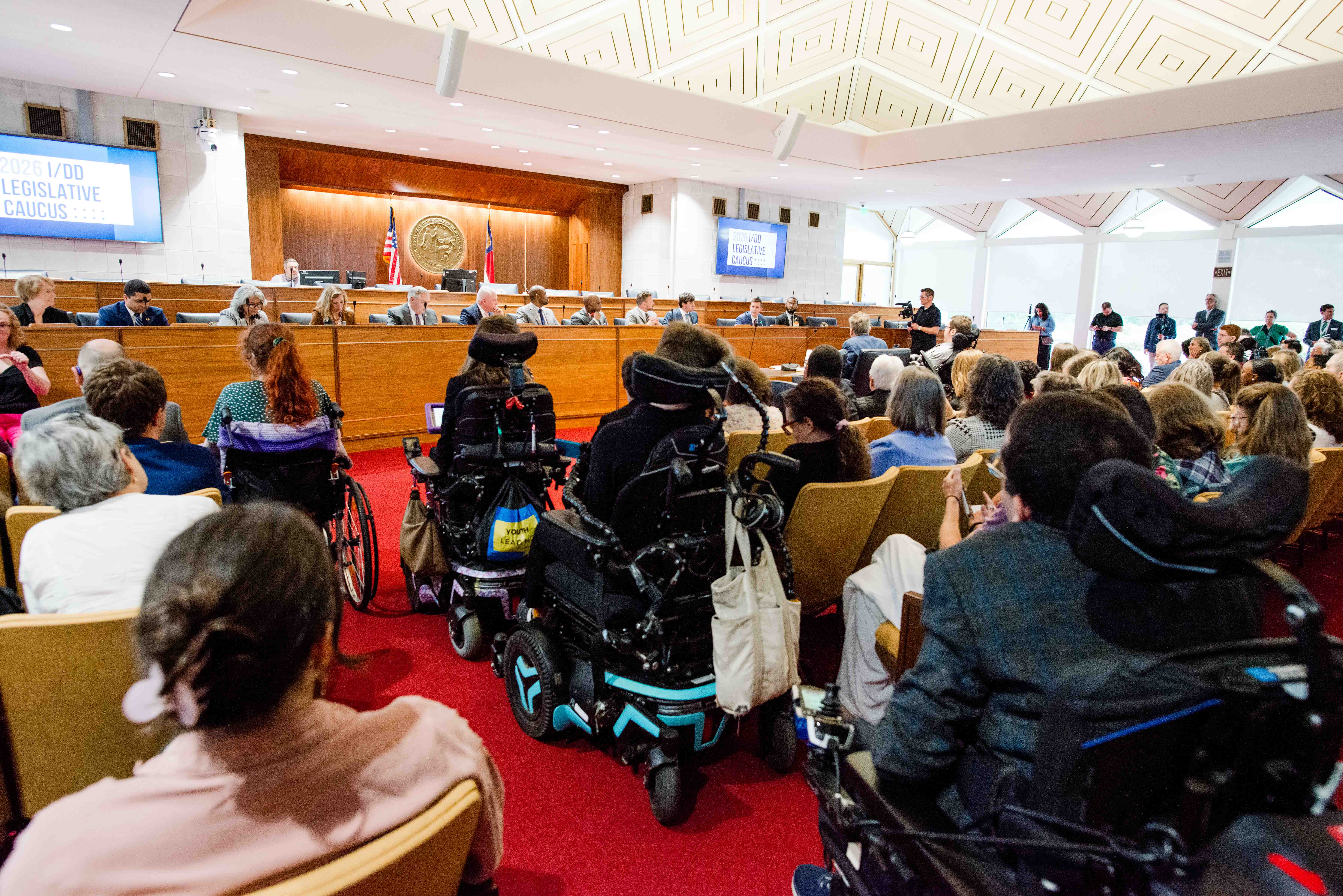
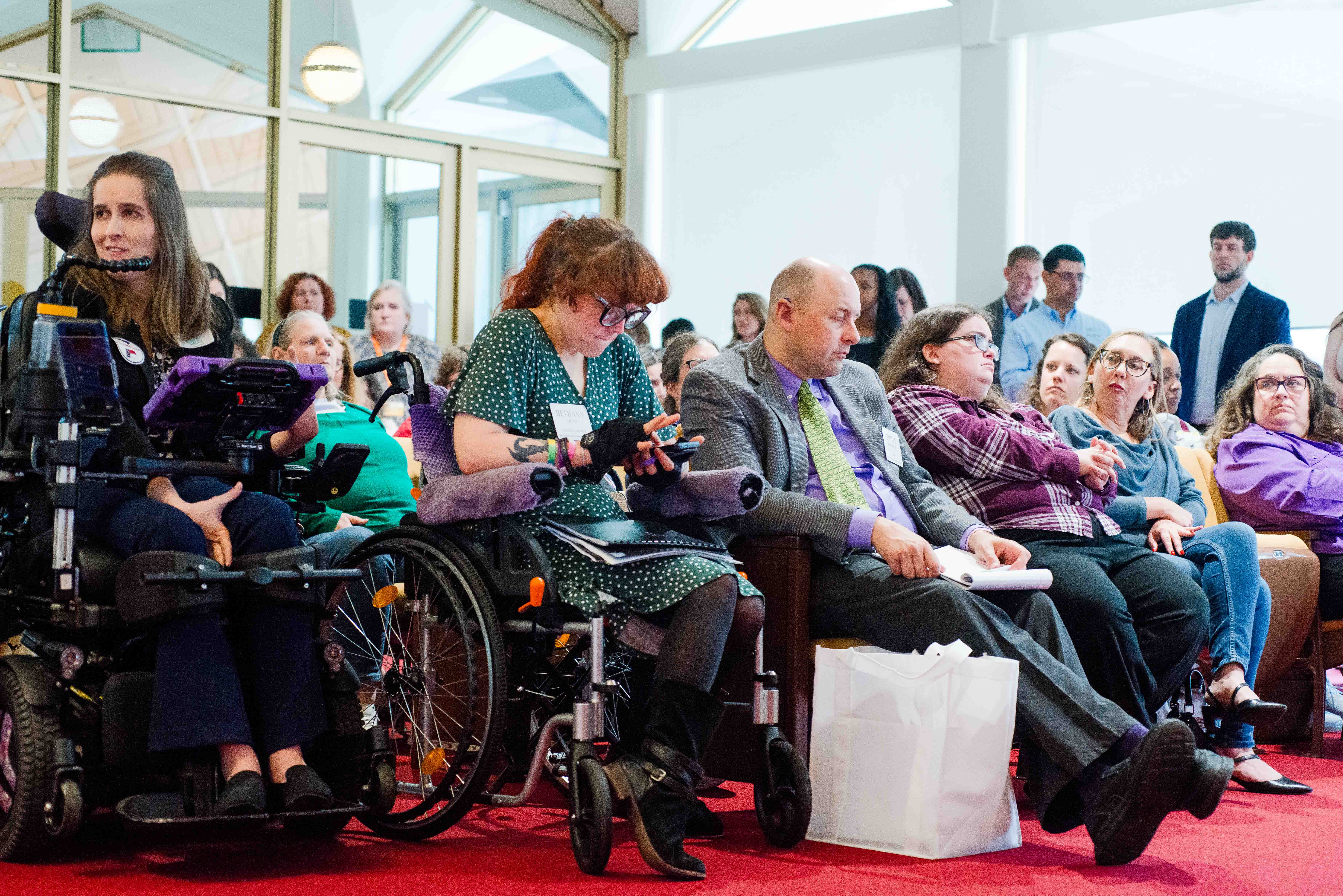
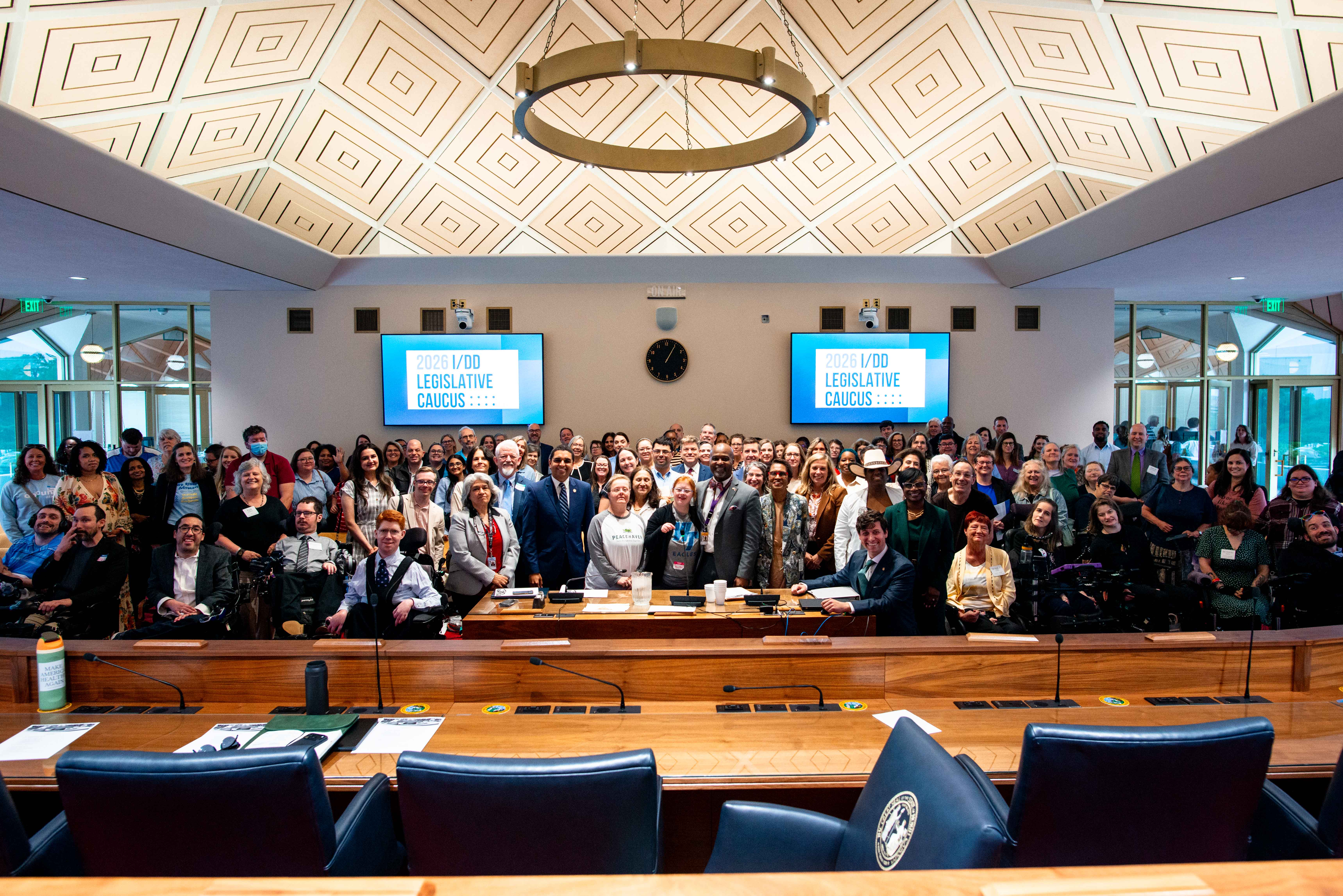
Twenty-six legislators and more than 200 advocates, self-advocates, family members, and partners gathered on April 29, 2026, at the North Carolina Legislative Building in Raleigh for the 2026 I/DD Caucus. Fifteen people with intellectual and developmental disabilities (I/DD) and family members shared their experiences and priorities directly with policymakers.
The Caucus highlighted critical issues facing the I/DD community, including the waiting list for services, the direct support workforce, and funding for essential supports. People with I/DD and their families emphasized the importance of community living, independence, and full inclusion.
The event included remarks from state leaders and self-advocates, a discussion between 10 legislators and more than 50 advocates and family members, and personal stories from people and families across North Carolina.
The Caucus increased awareness of the need for strong I/DD services and supports, strengthened connections between advocates and policymakers, and generated media attention. The following day, Representative Sarah Crawford highlighted the event during the signing of 2026 Medicaid funding at the Governor’s Mansion with the Governor and bipartisan legislative leaders.
I/DD Caucus in the News
- Intellectual and Developmental Disabilities Caucus Day (EdNC, April 30, 2026)
- I/DD Caucus on Podcast (WPTF Afternoon News, April 29, 2026)
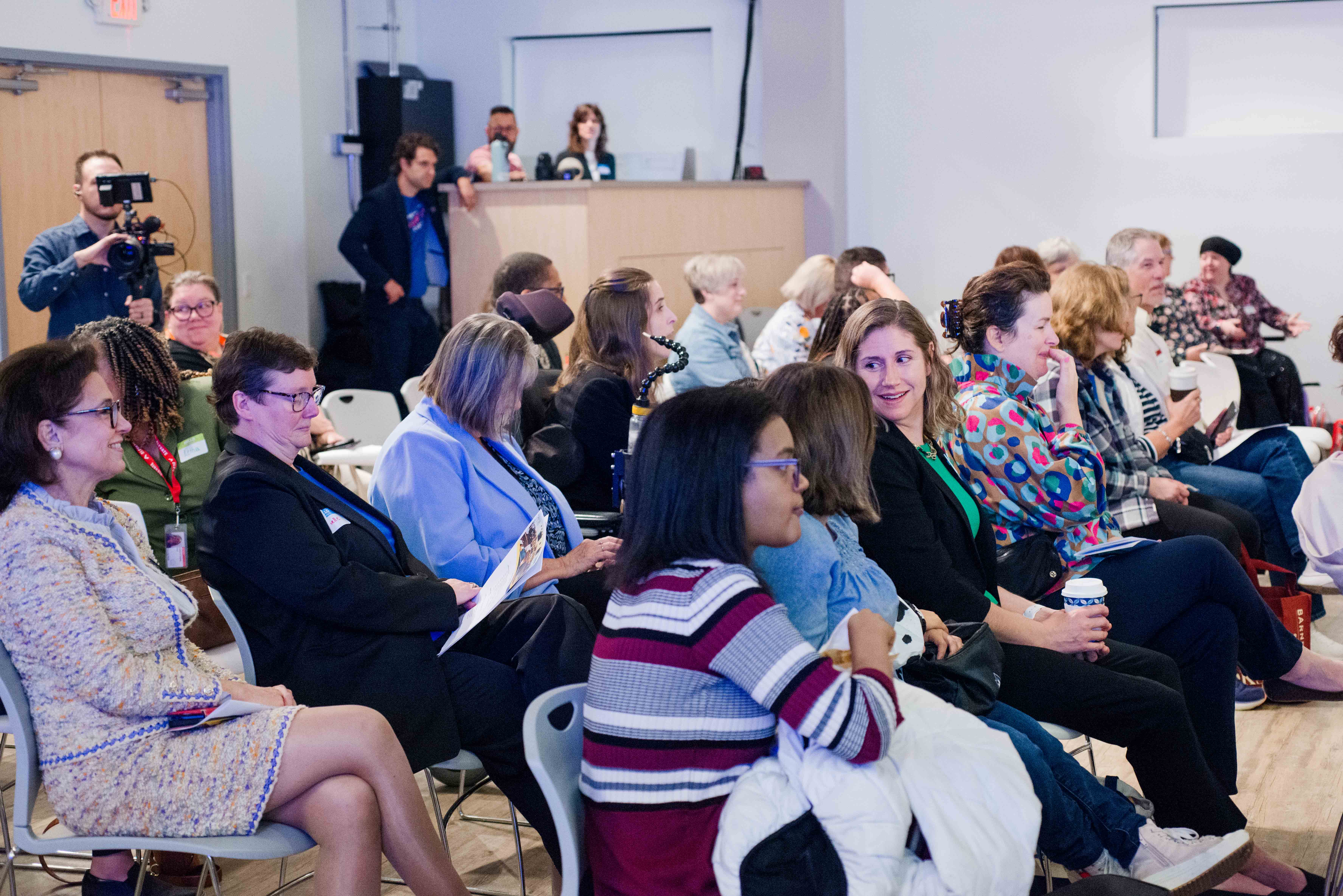
NCCDD launched a three-part webinar series in September 2026 to help families and professionals better understand autism diagnoses, interventions, and available supports. The first two webinars were held in September, and the third one was scheduled for the next fiscal year in October.
Fourteen presenters, including clinicians, researchers, self-advocates, and other experts, shared information with 180 attendees about the diagnostic process, reliable resources, and evidence-informed intervention approaches.
The series helped families understand their options, ask informed questions, and explore supports that meet their children’s individual needs. It also increased awareness among professionals and policymakers about the importance of timely access to information, services, and a range of support options.
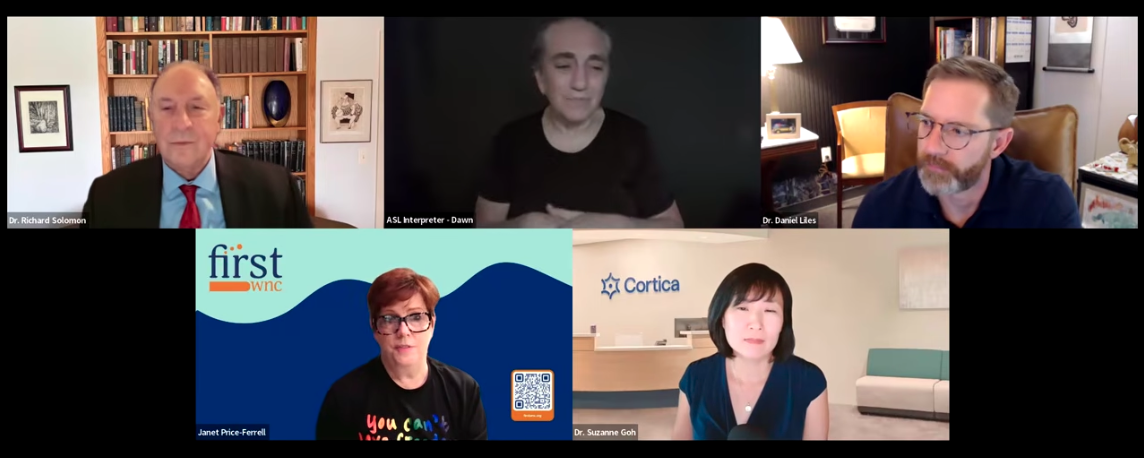
Experts from around North Carolina and around the country presented during the series. All three webinars were recorded and are available on NCCDD’s YouTube channel.
Engaging, Empowering and Recognizing Advocates
NCCDD offers opportunities for people with I/DD and the I/DD community to learn and connect while building their self-advocacy skills and learning from others through shared experiences. The goal is to provide them with the tools they need to experience more independence, a better quality of life, and a stronger voice in their communities.
Click on the + symbol to the right of the section heading to view the section’s content.
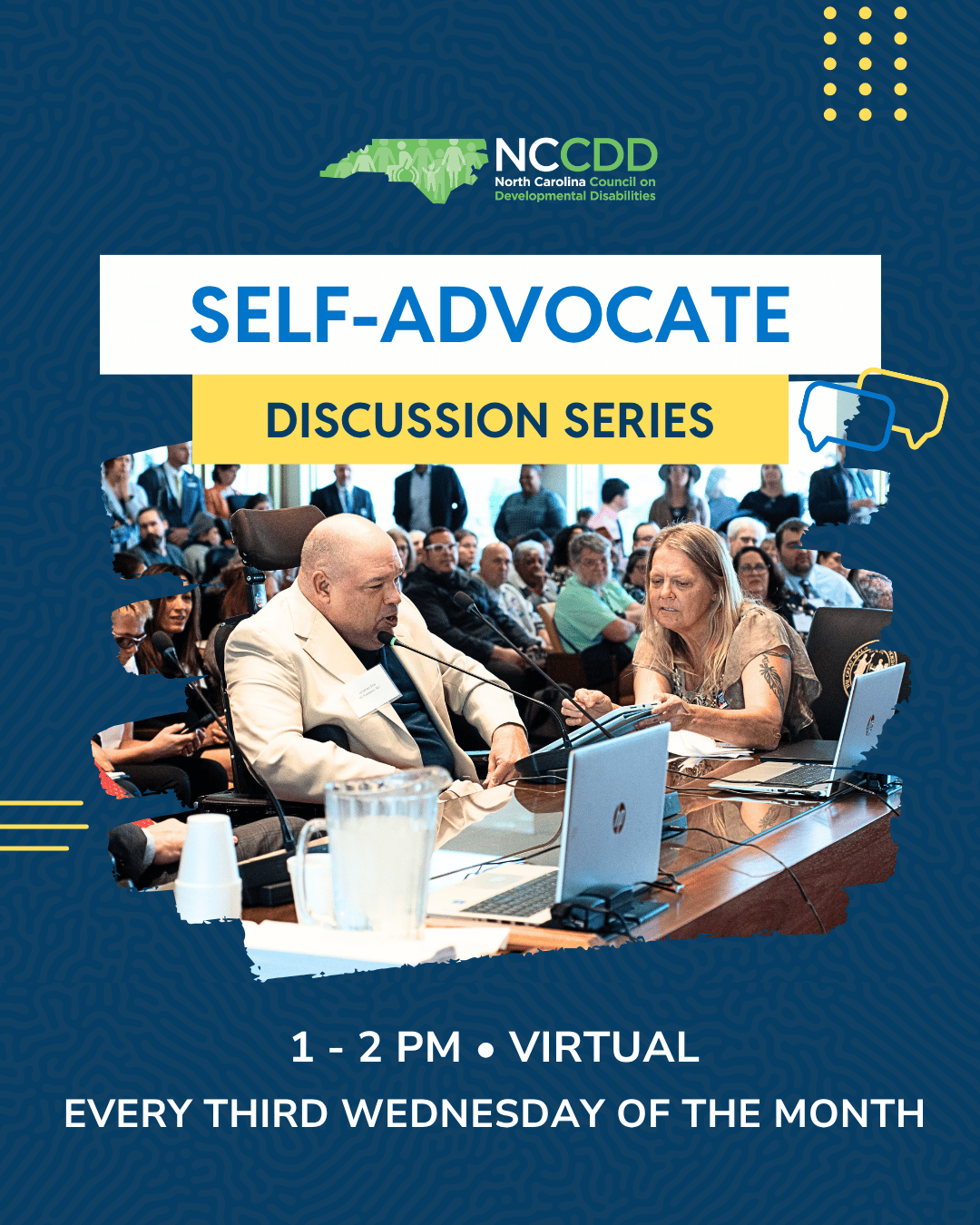 NCCDD hosts a monthly Self-Advocate Discussion Series webinar. The series aims to keep North Carolina self-advocates informed and engaged in discussion on topics of social and systems change. Series sessions are a time to connect with others with lived experience and common interests, develop impact strategies for telling personal stories, and stay connected with the NCCDD community.
Topics included coordinated advocacy, post-secondary options after inclusive high school programs, developing healthy relationships, transportation, voting rights, assistive technology, and more. Watch recordings of the webinars on YouTube.

NCCDD offers The Council Presents webinar series to keep the I/DD community informed and connected. It features expert insights, community updates, and a way to engage with community stakeholders, professionals, and individuals with I/DD.
In 2026, 522 advocates, providers, stakeholders, family members, and individuals with I/DD attended. Topics included housing, ABLE Accounts, plain language, Olmstead 101, Work Together NC, and more. Watch recordings of the webinars on YouTube.
Episode highlight: Olmstead 101
“To me, Olmstead is more than a Supreme Court decision. It is a promise that every person with a disability belongs in the community and deserves the services, relationships, freedom and opportunities needed to build a life of their own choosing.” - Brian Dooley, Webinar Panelist
This panel discussion covered the history of the Olmstead Decision, national policy achievements, and implementation of North Carolina’s Olmstead Plan. Self-advocates and state experts discussed how the decision has affected the lives of people with disabilities in North Carolina and across the country. Panelists included state leaders, disability rights advocates, and legal experts.
Every year, NCCDD honors individuals whose work has advanced opportunities and access for people with I/DD with its annual Advocacy and Leadership Awards. At the November 2025 Council meeting, these award recipients. Learn more about the Advocacy & Leadership Awards.
Kerri Eaker Mountain Mover Award: Lauren Howard and LaDonna Huffaker
North Carolina Leadership Achievement Award: Laura Newell
Jack B. Hefner Memorial Award: Ray Hemachandra
Helen Riddle Distinguished Service Award: Pat Keul
Initiative Highlights
NCCDD’s Five-Year State Plan supports initiatives that help people with I/DD live better lives. These projects focus on building advocacy skills, supporting community living, and helping people become more financially independent. The goal is to give people with I/DD the supports and services they need to live full, meaningful lives.
Read highlights from several of NCCDD’s initiatives. For a list of all 2025-2026 projects, go to Current Initiatives.
Click on the + symbol to the right of the section heading to view the section’s content.
The Advancing Leadership Program of North Carolina (ALP-NC) continued to develop leaders with intellectual and developmental disabilities (I/DD). A total of 28 leaders graduated, bringing the program’s total number of graduates to 126 since its launch. The program accepted 22 leaders for its September–November 2026 cohort, with 11 people with I/DD serving among the 18 facilitators.
ALP-NC graduates are making an impact across North Carolina by serving on advisory boards, mentoring others in employment settings, and speaking at statewide advocacy events. The ALP-NC Alumni Network, launched January 1, 2026, provides ongoing opportunities for graduates to connect, learn, and grow through monthly continuing education and networking sessions.
ALP-NC goes national! Centered Resources is bringing North Carolina’s ALP model to Kentucky, with its first cohort of leaders graduating in November 2026.
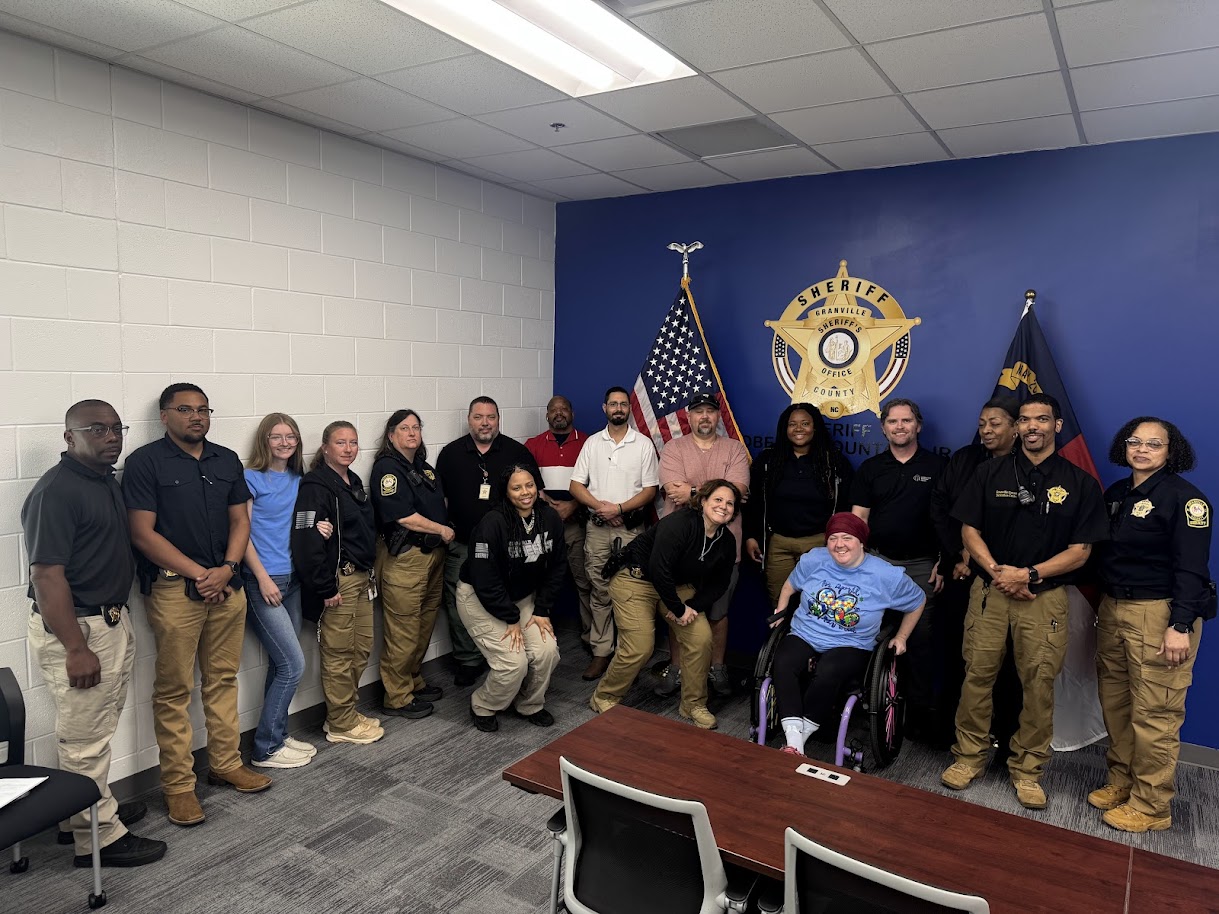
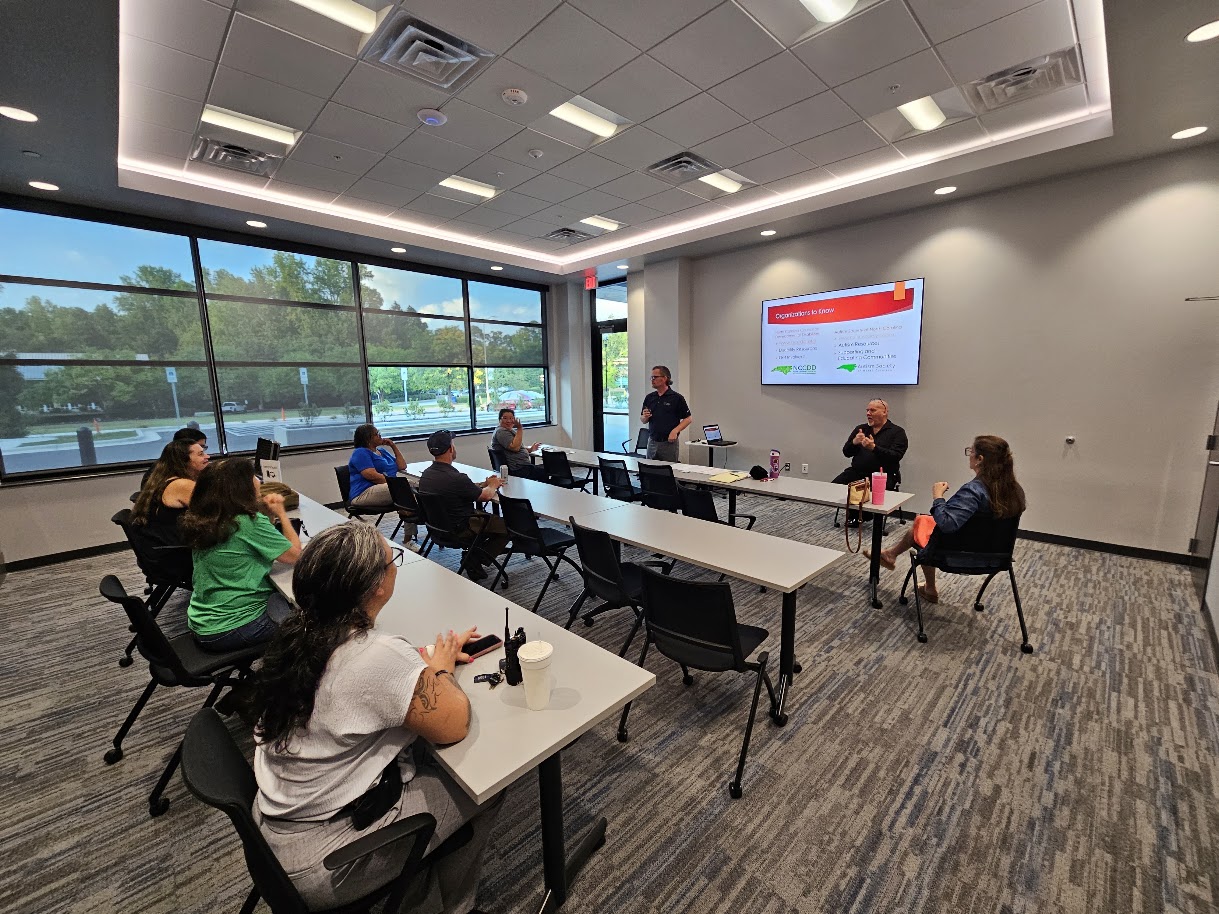
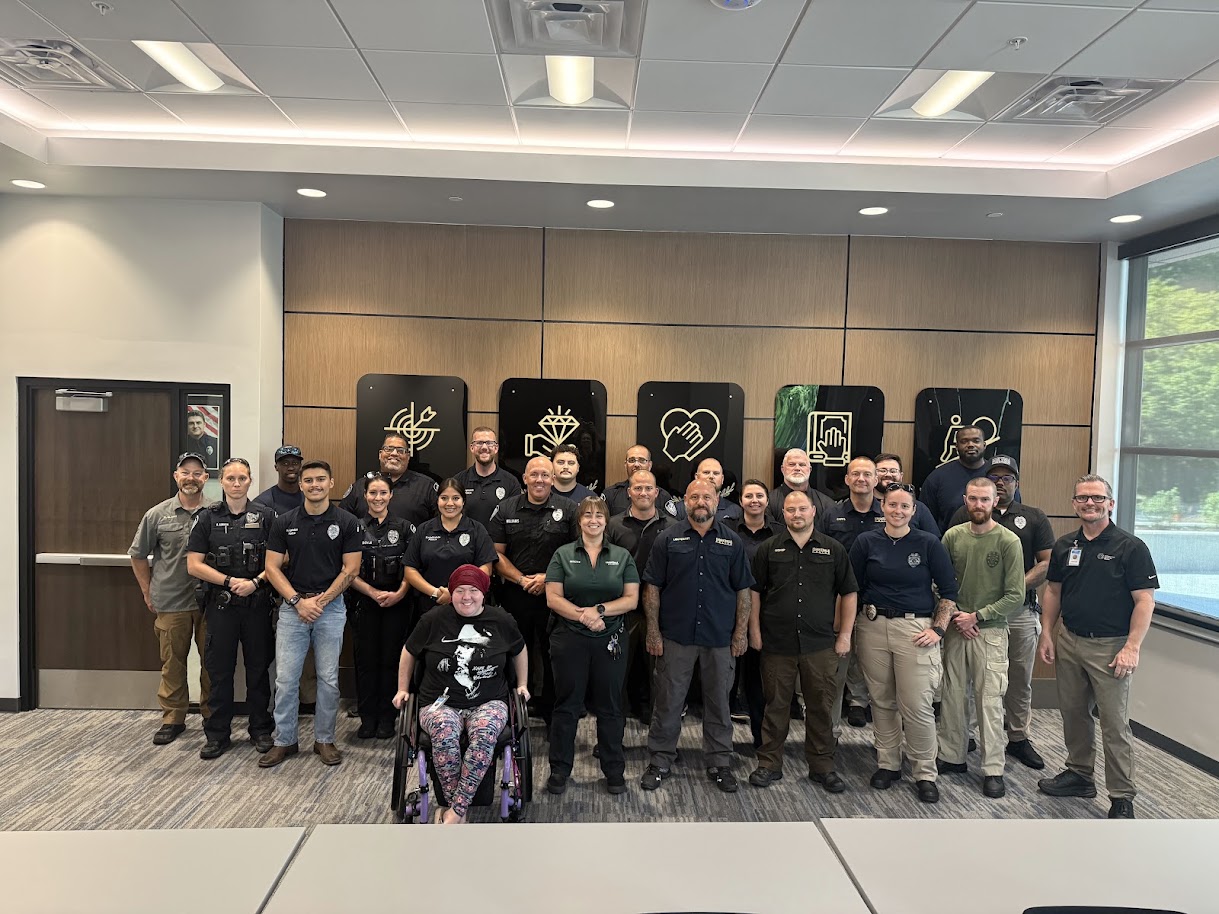
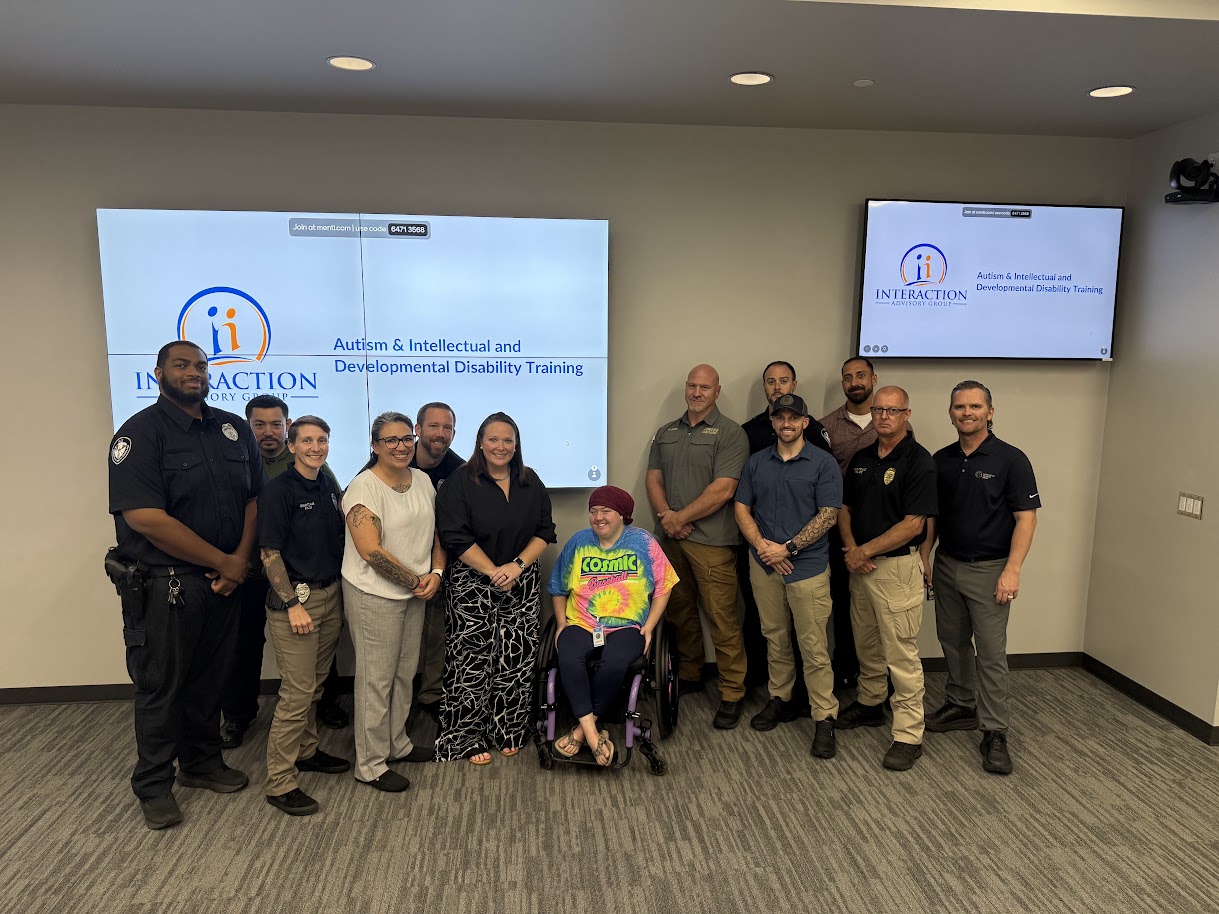
During this initiative’s final year, training for law enforcement officers and first responders and community safety education programs for people with I/DD and their families were held in Granville, Guilford, and New Hanover counties. Other key activities included training 475 Raleigh Police Department officers, presenting at the RISE Back to School Safety Summit held in Greenville, and supporting the launch of the Blue Envelope Program in Knightdale. People with I/DD and family members also helped deliver trainings, bringing valuable firsthand perspectives to community safety efforts.
In the news: Police chief works to bridge gap between his force and growing autism community (Spectrum News 1, June 8, 2026)
Learn more about this initiative
Winston-Salem State University began its third year of Council funding to develop PILLARS, one of the first inclusive postsecondary education (IPSE) programs at a historically Black university in North Carolina. The program drafted staff, student, and peer mentor handbooks and developed its course curriculum. Plans also include internships and work-based learning opportunities with mentors and community partners to support employment outcomes. Recruitment is expected to begin in late fall 2026, with classes starting in August 2027. A bilingual informational pamphlet is being prepared to support recruitment.
Planning for the Next Five Years
Work continued from the previous fiscal year to develop and finalize NCCDD’s Five-Year State Plan for 2027–2031. The Plan establishes the Council’s priorities and guides funding decisions to improve services, supports, and opportunities for North Carolinians with I/DD.
In 2026, NCCDD developed draft goals and objectives based on feedback gathered through public surveys and listening sessions during the previous year. People with I/DD, family members, and community stakeholders reviewed the draft and provided feedback to help strengthen and refine the Plan. The Plan was finalized in August 2026, with implementation beginning October 1, 2026.
 Goal 1: Increase Advocacy and Leadership
Objective A: Increase Advocacy
Objective B: Educate and Engage I/DD Community
Objective C: Raise Awareness with Policy Leaders and Citizens
 Goal 2: Belonging and Community
Objective A: More Housing Choices and Better Transportation
Objective B: Better Prepare for and Respond to Emergencies
Objective C: Increase Access to Supports and Services

Goal 3: Increase Financial Security and Independence
Objective A: Increase Competitive Integrated Employment
Objective B: Increase Inclusive Post-Secondary Education Leading to Work and Independence
Objective C: Build Financial Knowledge
Media Relations and Outreach
NCCDD shares news and updates with people in North Carolina’s I/DD community through its website, emails, social media, and news stories. This includes information about NCCDD projects, important I/DD news from other groups, and special campaigns.
Website
During this fiscal year,

Email Marketing

Social Media

Media Mentions

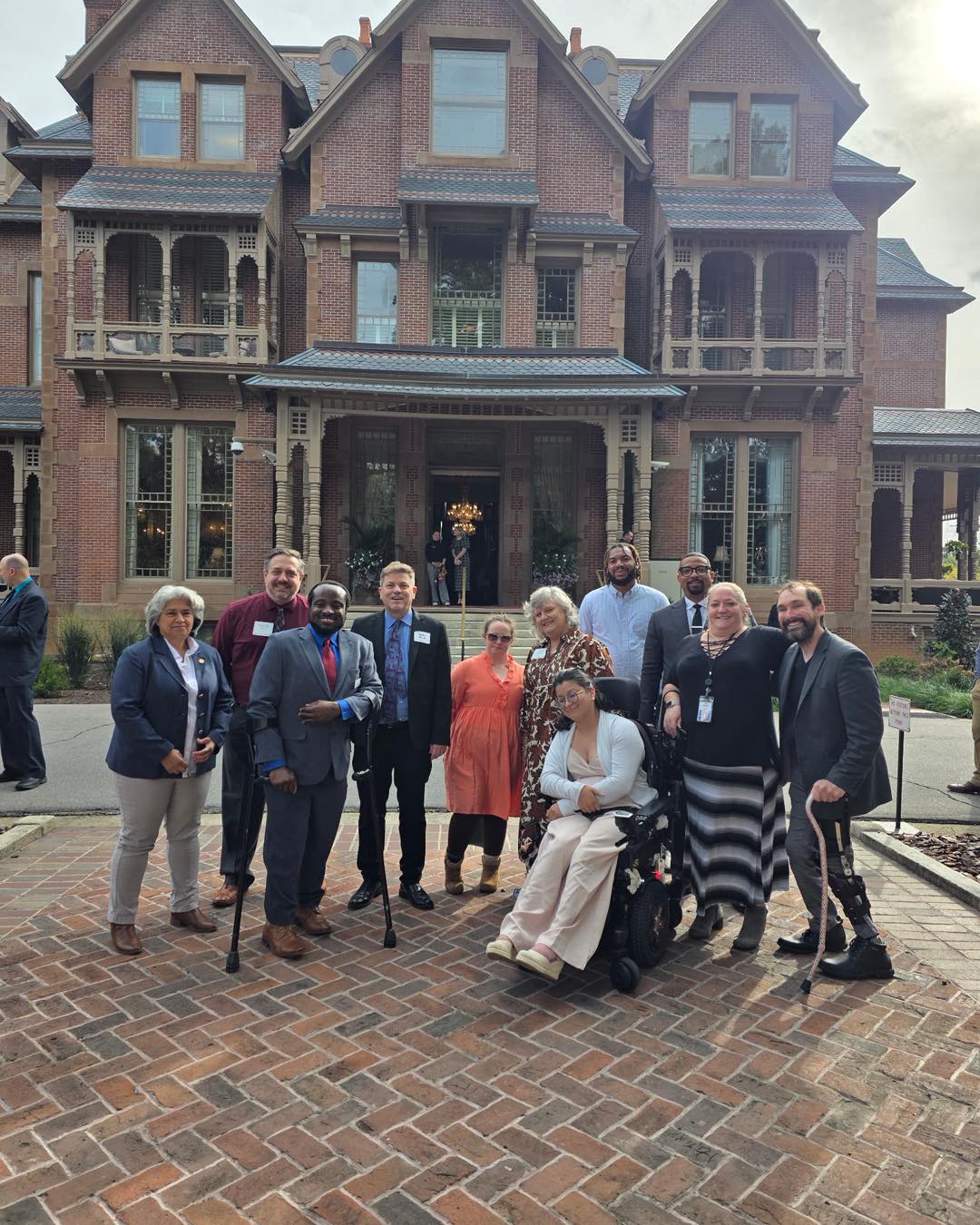 Media mention: NCCDD Joins Governor Stein to Honor National Disability Employment Awareness Month
Budget for FFY October 1, 2025 - September 30, 2026
| BUDGET | AMOUNT | % |
|---|---|---|
| Goal 1: Financial Asset Development (FAD) | $512,534 | 24% |
| Goal 2: Community Living (CL) | $521,960 | 24% |
| Goal 3: Advocacy Development (AD) | $606,960 | 28% |
| Operations Staffing & Administration | $521,068 | 24% |
| TOTAL BUDGET | $2,162,522 | 100% |
The 2025 - 2026 Impact Report is also available as a PDF download in English and Spanish.
|
Download the |
This project is supported by grant number 2401NCSCDD ($2,162,660.00), which is 100% federal funding, from the U.S. Administration for Community Living, Department of Health and Human Services, Washington, D.C. 20201. The contents are those of the author(s) and do not necessarily represent the official views of, nor an endorsement, by ACL/HHS, or the U.S. Government.