April 2026 Highlights and Hot Topics
The April 2026 issue of Highlights and Hot Topics includes a letter from NCCDD’s executive director, an update on NCCDD's public policy education efforts, a public policy update, an inclusive fitness mini-grant highlight, and upcoming NCCDD webinars.
- Letter from the Executive Director
- Staying Informed: NCCDD Provides Public Policy Education
- Public Policy Updates (as of 4/20/26)
- Building Health, Confidence, and Connection Through Inclusive Fitness
- Upcoming NCCDD Webinars in May
- Boletín en español
- Newsletter in Accessible Audio
Letter from the Executive Director
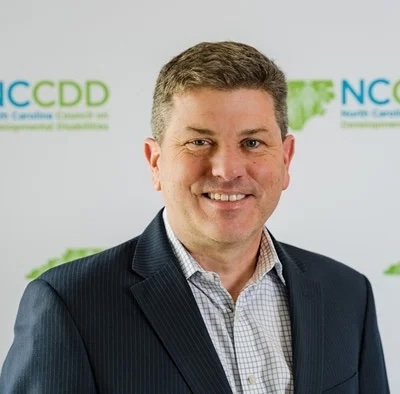 Spring has sprung. There is new life all around us with flowers budding, birds chirping, and the air warming. I’ve taken time each weekend recently to work in the yard and enjoy being outside.
Spring reminds me that there is new life and new opportunities with each coming year and each new season.
This last year has been challenging for the intellectual and other developmental disability (I/DD) community. We have faced relentless challenges to Medicaid and other critical funding. Individuals with I/DD and families are exhausted.
Yet, spring reminds me of the resilience of her community. It reminds me that friends with I/DD and their families are constantly finding new and innovative ways to overcome obstacles.
This spring, many of us have been down to the General Assembly to prepare for the I/DD Legislative Caucus and to attend hearings on critical issues. While each issue is difficult, we have made friends on both sides of the aisle. We are building energy and support for the I/DD community.
It is not clear to me yet when all of our hard work will create new funding and possibilities for the I/DD community, but I know it will. I know our hard work will make a difference because our community shows up and perseveres and innovates and makes friends.
I find hope in the spring. I also find hope in the hundreds of people with I/DD who travel each year to our General Assembly to build support and relationships. I am grateful for each of you!
Talley Wells, NCCDD Executive Director
Staying Informed: NCCDD Provides Public Policy Education
The North Carolina Council on Developmental Disabilities (NCCDD) works to educate and inform North Carolina’s intellectual and developmental disabilities (I/DD) community, along with key decision-makers. By sharing timely, accessible information, NCCDD helps support policies that promote full inclusion of people with I/DD in all aspects of community life.
As part of this role, NCCDD provides public policy education—it does not lobby on specific legislation.
Identifying Priorities
NCCDD’s policy education efforts are guided by its public policy priorities. For 2026, the Council has identified several key focus areas:
- Protect Medicaid and I/DD services during ongoing federal and state budget challenges
- End the waiting list by developing and funding a plan to serve the more than 20,000 individuals currently waiting for services
- Increase direct support professional (DSP) wages to strengthen the workforce
Additional priorities include:
- Expanding housing and transportation options
- Increasing Competitive Integrated Employment (CIE)
- Ensuring the success and effectiveness of I/DD services
You can download the full 2026 Public Policy Priorities Information Sheet to learn more.
Attend Monthly Policy Education Meetings
NCCDD hosts a monthly Policy Education Meeting on the second Thursday of each month from 10:30 a.m. to 12:00 p.m. via Zoom.
These meetings provide updates on state and federal policy, budget developments, and other issues impacting people with I/DD. Participants also have the opportunity to ask questions and engage in open discussion. The meetings are free and open to all, offering an easy way to stay informed and connected.
Register here: www.zoomgov.com/meeting/register/vJItdu-uqD8oHpxzFX9FiES_lSmk_8OP4r4#/registration
Get Monthly Updates
Read summaries that cover key developments in state and federal policy and public policy in NCCDD’s Public Policy Blog and Highlights and Hot Topics newsletter.
Public Policy Update (as of April 20, 2026)
(as of April 23, 2026)
Note: After the Public Policy Update below was written on 4/23/26, the North Carolina General Assembly began to vote on legislation to fully fund Medicaid for the rest of the year. It used $319 million from North Carolina’s Contingency Reserve fund. The legislation included some provisions to address rising costs of Medicaid. It also added certain requirements for ABA therapy. Also, Governor Josh Stein released his proposed budget. The proposed budget included funding for 200 additional Innovations Waivers.
FEDERAL
President’s Budget
As part of the federal budget process, the President released a proposed budget for fiscal year 2027 in early April. It proposes increasing defense spending by over 40% and decreasing non-defense programs by $73 billion. As with last year’s proposed budget from the President, there are proposed cuts to disability programs. University Centers for Excellence in Developmental Disabilities (UCEDDs) would be eliminated. The Leadership Education in Neurodevelopmental Disabilities (LEND) Programs would be decreased by almost $20 million. State DD Councils and Protection and Advocacy agencies are proposed to receive only a small decrease. Like last year, there is also a proposed restructuring plan for Health and Human Services (HHS), which would eliminate the Administration for Community Living.
The President’s budget is not legislation, but it is required to be submitted each year. It provides insight into the Administration’s priorities. Last year, Congress rejected these cuts and also rejected the restructuring plan for HHS.
Appropriations
Congress has now begun the process of considering appropriations legislation for FY 2027. The House and Senate are expected to start drafting and marking up appropriations legislation in the coming weeks. The House has held hearings for agency leadership to talk about the President’s budget.
On April 16, 2026, HHS Secretary Kennedy met with the House Appropriations Committee. The topics of discussion included vaccines, and Medicaid and Medicare fraud. The Secretary defended the cuts to HHS that were in the President’s budget. He emphasized the idea that there is extensive fraud in Medicaid and Medicare. Most Republicans on the committee were supportive of the focus on stopping fraud, with specific attention to Home and Community Based Services (HCBS). Leading Democrats on the Committee said that Congress will not cut the funding that the President wants to cut.
Over the next few weeks, there will be more information coming from Congress regarding the budget as the House and Senate follow their budget processes. There seems to be less consensus this year about the budget, and coming to an agreement will take months. It is expected that there will be a Continuing Resolution in September before the start of the FY 2027 in October.
Reconciliation 2.0
As of April 20, 2026, the Senate is taking initial steps toward a "Reconciliation 2.0" bill to resolve a partial government shutdown and secure long-term funding for the Department of Homeland Security (DHS). Reconciliation is the process used last year to pass H.R. 1 which included the large Medicaid cuts. Reconciliation can be used for mandatory spending and only requires a simple majority (51 votes) instead of 60 votes.
The primary goal of this bill is to end the DHS shutdown and provide multi-year funding for Immigration and Customs Enforcement (ICE) and Border Patrol. Senate leadership has advocated for keeping the bill focused on DHS funding; however, some Senate members are pushing to include other items, including changes to Medicaid, Medicare, or SNAP.
President Trump has set a deadline set of June 1, 2026 for the passage of this bill. The first steps in this process are for the Senate and House to pass budget resolutions, which will outline the process for reconciliation. The goal is to have this complete by the end of April.
STATE
The NC General Assembly convened on April 21, 2026 for a short legislative session. The short session is typically focused on making minor budget adjustments and passing a small number of bills. However, during last year’s long session, NC lawmakers were unable to agree on a budget. The federal cuts to Medicaid and other state programs are creating pressure to approve a budget. Key issues related to the budget include whether to allow planned tax cuts to proceed, state employee salary increases, and the Medicaid funding shortfall for this fiscal year. There is concern that delays in the budget process could reduce access to services funded through Medicaid. Key House leadership has stated that they expect the legislature to approve funding to address the shortfall. The concerns about Medicaid fraud at the federal level are also being expressed at the state level, so there may be additional requirements for addressing fraud and the rising Medicaid costs that come with the funding.
Building Health, Confidence, and Connection Through Inclusive Fitness
In 2024, the North Carolina Council on Developmental Disabilities (NCCDD) funded a mini-grant to Bloom Fitness Corporation to increase access to personal health and wellness opportunities for adults with intellectual and developmental disabilities (I/DD). The project focused on developing a highly accessible and easy-to-use fitness app designed for and by people with I/DD.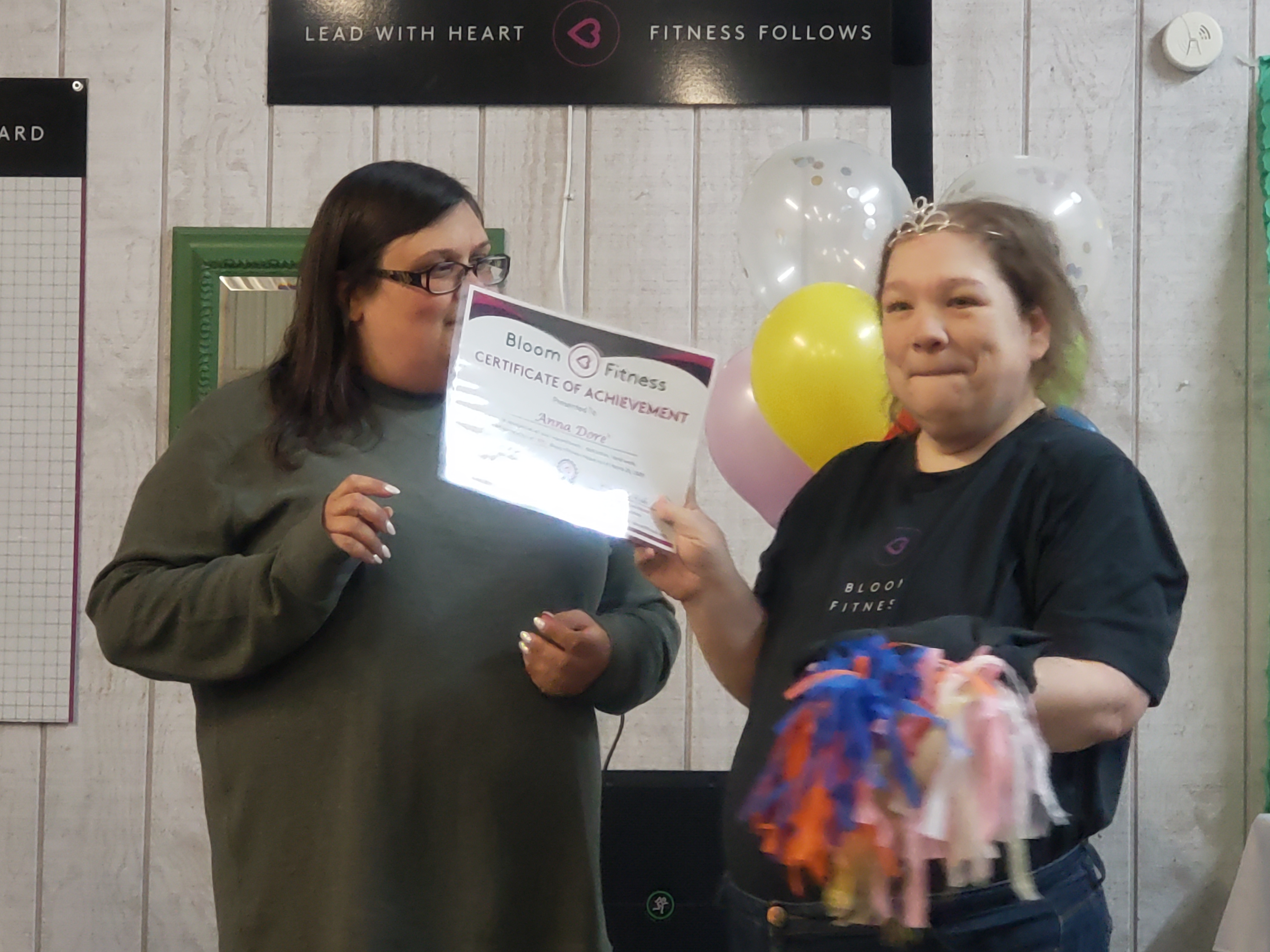 Anna receiving her Bloom Certificate of Achievement
The Bloom Fitness app is available on both iOS and Android devices, offering athletes with I/DD and their caregivers a way to participate in fitness classes anytime, anywhere. To ensure the app is easy to navigate and inclusive of diverse needs, Bloom Fitness developed a step-by-step video tutorial, supported by a Board-Certified Behavioral Analyst so that Bloom Fitness staff could address as many behavioral and communication needs as possible. The app allows athletes to track their attendance, set goals, and celebrate their progress, reinforcing consistency and personal achievement.
The program offers a variety of activities, including weights, yoga, Pilates, dance, cycling, and chair fitness. But it goes beyond traditional exercise programs. Classes are offered in flexible formats: in-person, on-demand videos, and Bloom Live! online sessions. Each class is designed to be adaptable to meet the unique needs and abilities of every participant.
Bloom Fitness reports that 96% of their athletes report feeling healthier, and 70% say they feel less lonely as a result of their participation. And participants say the program is making a meaningful difference in their lives:
“Bloom keeps me in shape mentally and physically. My favorite thing is actually everything. The app is easy to use.” — Weldon
“Bloom gives me a lot of energy and I get to dance with friends.” — Aaron
“I love Bloom. It is making me lose weight. It makes me feel good. I like the live classes on the app and we can see the instructor.” — Anna
“Bloom is exciting to do and it is fun for me. I like the Bloom Live classes because the instructor brings the house down!” — David
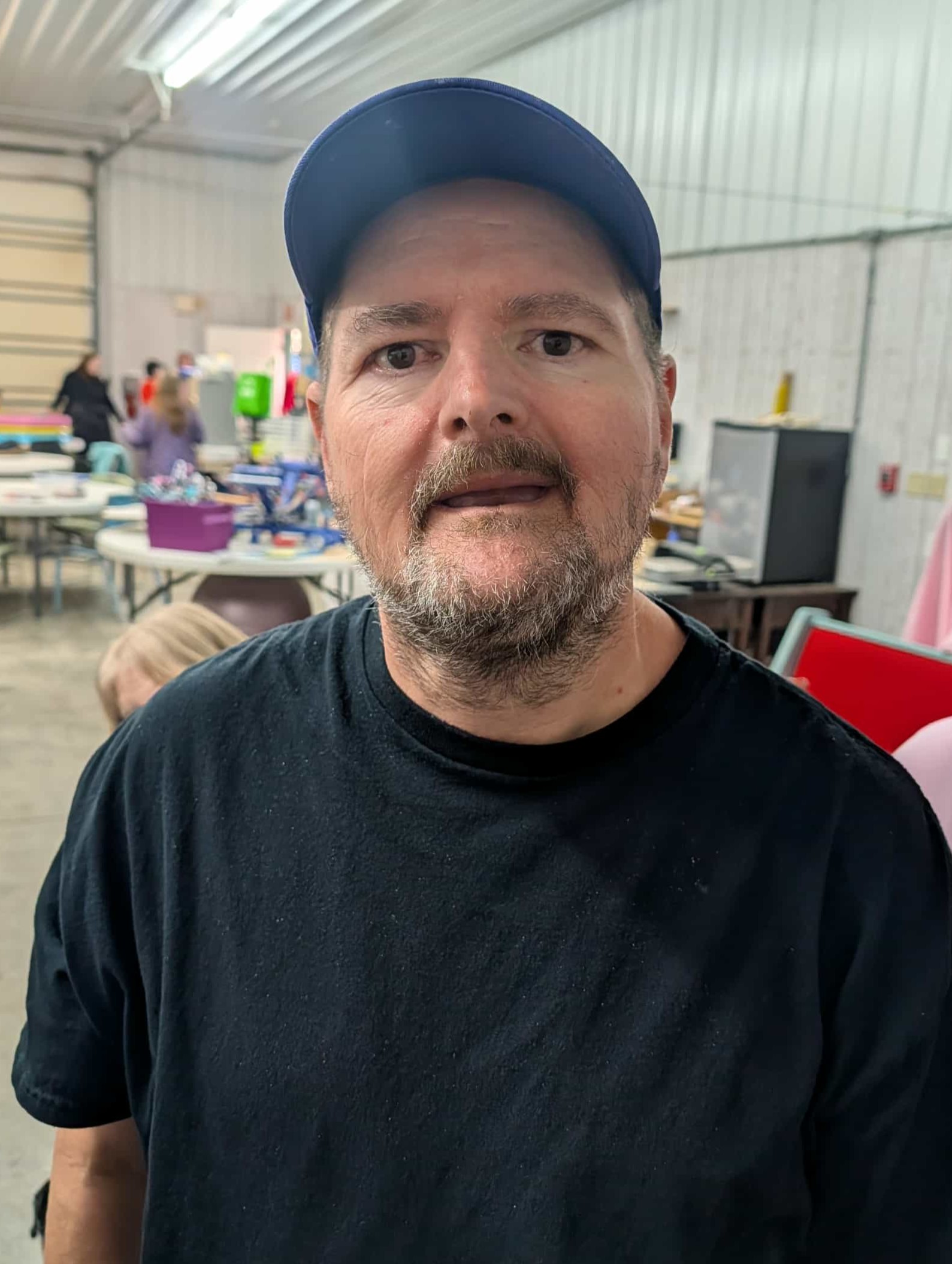

Weldon (left), David and Bloom staff member Beryl (center), and Aaron (right)
This project highlights how accessible technology, combined with community-centered programming, can improve both physical health and social connection for people with I/DD.
Learn more about Bloom Fitness at https://bloomfitness.org/ or download their flyer.
Upcoming NCCDD Webinars in May
The North Carolina Council on Developmental Disabilities (NCCDD) offers several monthly webinars to help you stay educated and informed. All meetings are free and open to the public. Stay informed and become involved in important conversations – there’s something for everyone in the I/DD community!
Policy Education Meeting
Thursday, May 14, 2026, from 10:30 AM to Noon
Learn about important updates about state and federal policies, budget developments, and other issues that affect people with intellectual and developmental disabilities (I/DD). There will also be time for questions and open discussion. Please note that NCCDD only provides public policy education. The Council does not lobby on specific legislation.
Register here: https://www.zoomgov.com/meeting/register/vJItdu-uqD8oHpxzFX9FiES_lSmk_8OP4r4#/registration
Self-Advocate Discussion Series
Topic: Adulting with I/DD
Wednesday, May 20, 2026, from 1 - 2 PM
Mainstream sources say that “adulting” means to behave in an adult manner, engage in activities associated with adulthood, and attend to the ordinary tasks required of a responsible adult. In this session, guests Barton and Megan Cutter, along with attendees with intellectual and other developmental disabilities (I/DD), will share some of their adulting stories related to relationships, working, playing, and just plain living. Have you used a “bailout plan” on a date? Has a stranger ever asked you personal questions that started with “Because you have a disability…”? Do you have a story about your first or best kiss? Join us and share your stories about adulting as a person with I/DD.
Note: Please register at least one week before the session.
To register: https://www.zoomgov.com/meeting/register/GwJ-kZReQ7G4Joz9GYr_6g#/registration
Learn more about his webinar series: https://nccdd.org/get-involved/self-advocate-discussion-series
The Council Presents
Topic: Registered Apprenticeship
Thursday, May 28, 2026, from 1 - 2 PM
Registered Apprenticeship is an employer-driven training strategy that strives to meet the needs of the employer while providing an on-the-job learning experience coupled with related classroom education and reward for skills gained. The result is a nationally recognized credential and continued career opportunities.
In this session of our series, join us as we hear from Dale Yarborough, Deputy Director of the ApprenticeshipNC, who will lead us through an overview of apprenticeship training programs, and respond to your questions on this valuable pathway to employment options.
To register: https://www.zoomgov.com/meeting/register/JTEBPG47SW2g2Z9fVyH0PQ#/registration
Learn more about this webinar series: https://nccdd.org/get-involved/nc-council-presents
Boletín en español
Lea el boletín aquí: Aspectos destacados & temas de abril de 2026
Newsletter in Accessible Audio
Listen to the audio version: https://www.buzzsprout.com/2526321/episodes/19071643